



Why 304 Stainless Pipe Brushes for Plumbing and Heat Exchangers
Type 304 stainless steel pipe brushes are the safer default for plumbing and heat exchanger tube cleaning because the alloy forms a passive chromium oxide film. That film resists rust, chloride attack, and weak process chemicals. Carbon steel wire bristles cut aggressively and cost less, but they shed iron oxide and can contaminate potable water, closed loops, and sensitive tube surfaces. The real decision is not which brush removes deposits faster. It is whether the tool itself introduces corrosion, staining, or rejected water chemistry. This article compares 304 stainless wire pipe brushes with carbon steel wire brushes across wet plumbing, heat exchanger, and general pipe maintenance work.
What Separates 304 Stainless Wire From Carbon Steel Bristles
Type 304 stainless steel is an austenitic chromium-nickel alloy. Chromium in the alloy reacts with oxygen to form a passive oxide layer that blocks further oxidation. Carbon steel is mainly iron with a controlled carbon addition and no meaningful chromium reserve. When carbon steel meets water and oxygen, iron oxide forms on the bristle surface. That rust reduces wire strength and transfers to the pipe wall, packing, seals, and rinse water.
A pipe brush can be spiral wound or stem set. The bristle alloy rather than the brush shape controls this contamination risk. A spiral wound 304 stainless brush keeps corrosion resistance even when the bristles flex inside a bent or uneven pipe.
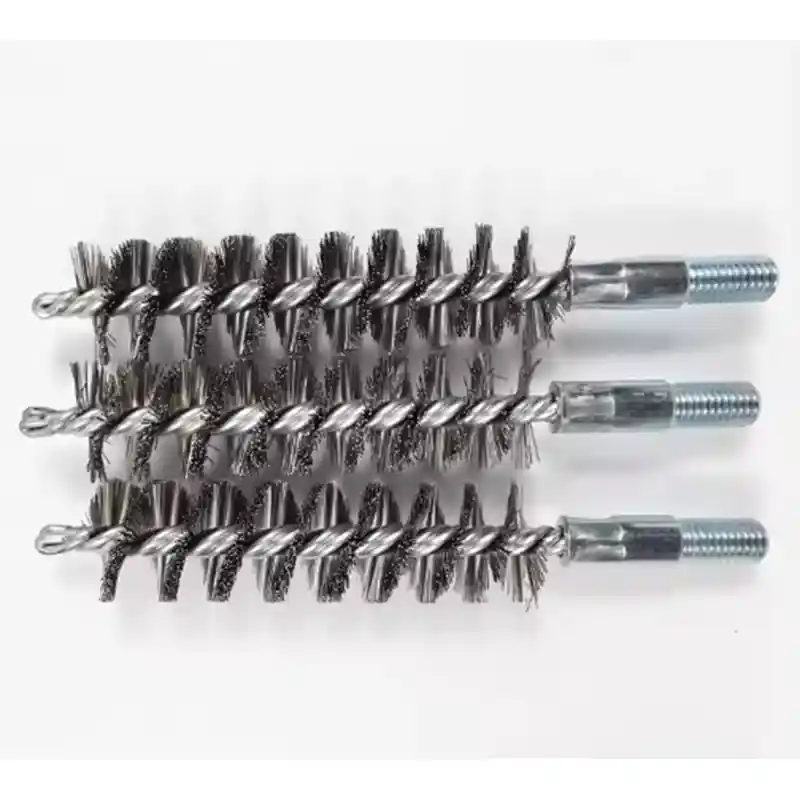
The alloy difference also changes chemical behavior. Carbon steel corrodes faster in acidic or chloride-bearing water. Type 304 stainless resists mild chemical exposure better, although it is not immune to every chloride condition. Warm stagnant chloride-rich water can still cause crevice corrosion. For aggressive acid service or seawater-like conditions, a higher alloy such as 316 may be a better request than assuming 304 will survive.
Why Rust Contamination Matters in Plumbing
Plumbing circuits often serve drinking water, food processing, or closed hydronic loops. A carbon steel brush used in these lines can leave behind iron particles and light rust bloom. The result may be discolored water, metallic taste, or clogged strainers downstream. In closed loops, loose iron can settle in low-flow zones and create a starting point for further corrosion. A 304 stainless brush does not remove the need for flushing. It prevents the cleaning tool from adding a new contamination source to the circuit.
Stainless wire brushes fit many cleaning operations where the tool must stay corrosion resistant. <where stainless wire spiral brush can be used> covers additional stainless wire brush applications across industrial cleaning tasks.
Specifying stainless is especially useful when the pipe material is also stainless. Mixing a carbon steel brush with stainless piping can leave free iron on the surface, which may rust before the passive layer recovers. That residue can create rust-colored spots and complicate passivation or final visual acceptance.
Heat Exchanger Cleaning Puts More Pressure on Bristle Selection
Heat exchanger tubes are often thin walled and made from copper, brass, stainless steel, or titanium. A brush that cuts scale aggressively can also score the tube interior, create stress points, or reduce heat transfer. Carbon steel wire can remove hard deposits quickly, but it is more likely to leave iron residue in a system that must stay clean. Type 304 stainless wire is less aggressive on softer tube metals while still removing soft scale, biofilm, and light mineral deposits.
What About Hard Scale or Sintered Deposits?
When the deposit is thick mineral scale or a hardened process residue, 304 stainless wire may need more passes than carbon steel wire. In those cases, the better approach is often a heavier fill or a larger wire diameter in stainless rather than switching the entire system to carbon steel. If carbon steel is used for a first heavy cut, follow with a stainless pass and a thorough flush to remove iron debris.
Can 304 Wire Damage Thin Tube Walls?
It can if the brush is sized incorrectly. Specify the tube inside diameter, wall thickness, and bend radius before ordering. In thin-walled exchanger tubes, prefer a spiral wound stainless brush with controlled outside diameter and test on a scrap tube or a noncritical tube section first.

The brush outside diameter matters more than the alloy when tube damage is possible. If the brush is too large, even stainless bristles can fold over and gall the tube wall. A correctly sized stainless brush removes enough deposit without using the tube itself as the pressure surface.
How 304 Stainless and Carbon Steel Compare in Pipe Cleaning
| Cleaning condition | Preferred wire | Reason | Do not choose carbon steel when |
|---|---|---|---|
| Potable water line interior | 304 stainless | Prevents iron contamination | Water quality is the acceptance test |
| Closed hydronic loop | 304 stainless | Reduces ferrous debris | The loop contains stainless or copper parts |
| Heat exchanger tubes | 304 stainless | Lower scoring risk on thin walls | Tube wall is thin or unknown |
| Acidic or chloride-bearing wash | 304 stainless | Tolerates mild chemical exposure | Acids or salts are present |
| Heavy dry rust in carbon steel pipe | Carbon steel | Faster on thick scale | The system is later used for potable or stainless service |
| Food or pharmaceutical surface | 304 stainless | Lower contamination risk | Surface purity is required |
The table is a starting point, not a universal ranking. The best choice changes when tube material, deposit chemistry, cleanup access, and water quality requirements change. In mixed-metal facilities, the risk of iron transfer is often a larger cost than the brush itself.
When Carbon Steel Is Still the Better Choice
Carbon steel wire brushes still have a place in heavy plant maintenance. They cut thick rust, mill scale, and sintered deposits faster than stainless wire, and the purchase price is lower. A maintenance team working on a carbon steel pipe that will be flushed, inspected, and returned to dry service can use carbon steel without creating a hidden contamination problem.
The risk rises when the same brush is used near stainless equipment or when iron residue can enter a closed loop or product-contact area. A drill-mounted carbon steel brush may also be practical for quick thread cleaning during teardown work. The cleaning speed is useful, but the brush should be treated as a consumable and kept away from passivated stainless surfaces.

For a plant that maintains only carbon steel systems, carbon steel brushes are economical and effective. For a facility with stainless piping, potable lines, or heat exchanger tubes, the lower contamination risk of 304 stainless usually outweighs the slower cutting speed.
How to Specify the Right 304 Stainless Wire Pipe Brush
Requesting the correct brush matters more than the alloy alone. Before ordering, record the pipe inside diameter, accessible straight length, bend radius, stem length, and end fitting. Specify a brush outside diameter that creates the intended interference fit without forcing the bristles to fold over. Wire diameter, fill density, and crimp or spiral construction should match the deposit type.
For most pipe interiors, a spiral wound stainless brush is a good starting point because the twisted stem supports the bristles while allowing some flexibility. A stem-mounted design may be easier to connect to a rotating drive in straight runs. Finer tube conditioning may require a honing-style brush with smaller wire or abrasive filament.


Filler density is not a simple quality measure. A dense brush increases contact, but it also reduces flexibility and may be harder to insert in small or bent tubes. A lower-density brush clears debris more easily in some applications. The correct specification follows the deposit, the tube ID, and the drive method.
Preventing Cross-Contamination in Mixed-Metal Facilities
In a plant that maintains both carbon steel and stainless systems, a shared brush can transfer iron particles from one area to another. That transfer can create rust stains on stainless surfaces and contaminate potable or product-contact circuits. Keep separate brush sets for carbon steel and stainless work. Mark the handles or storage positions, and inspect brushes before issue. After use, clean and dry the brush so it does not carry scale from one job into the next.
A practical system uses one brush color or storage rack for stainless-only service and another for carbon steel work. This is not extra bureaucracy. It is a simple control that prevents a cheap brush from causing a costly water quality rejection or a failed surface inspection.
Request the Right Pipe Brush Specification
Send the tube material, pipe inside diameter, accessible length, required stem or fitting, deposit type, and whether the system is potable or chemically cleaned. That information lets Huixi Brush recommend a 304 stainless wire pipe brush with the correct fill density and stem configuration instead of a generic size. Contact Liu Jian and the Huixi Brush team at [email protected] or +86 1580 0932 713.
FAQ
Does 304 stainless wire remove heavy scale as fast as carbon steel?
Not usually. Carbon steel wire cuts thick dry rust faster, but it also adds iron contamination and may require more cleanup. For plumbing, heat exchangers, and mixed-metal systems, the lower contamination risk of 304 stainless often makes it the better total choice.
Will a 304 stainless brush scratch copper or stainless heat exchanger tubes?
It can if the outside diameter is too large or the fill density is too stiff. Specify the measured tube ID and wall thickness, use a controlled interference fit, and test the brush on a scrap tube or a noncritical tube section first.
Can one pipe brush be used for both plumbing and industrial carbon steel piping?
Not if the plumbing line is potable or connected to stainless equipment. A brush used on carbon steel can carry iron debris into clean systems. Keep separate brush sets or clean and inspect the brush before changing service.
Does higher fill density always improve a 304 brush?
No. Higher density increases cutting contact, but it reduces flexibility and can make insertion more difficult in small or bent tubes. Match fill density to the deposit type, pipe ID, and drive method.
Is 304 stainless the right choice for every chemical cleaning job?
No. Type 304 handles many mild chemical and chloride conditions, but aggressive acids, warm stagnant chloride water, or seawater-like exposure may require a higher alloy such as 316. Match the alloy to the actual cleaning solution and operating temperature.
If you’re interested, check out these related articles:
the differences between knotted wire wheel brush and crimped wire wheel brush
main features and applications of hx nylon cylindrical brush
how do you know about deburring brushes
abrasive disc brush an efficient tool for many applications


 Whatsapp
 Email