



Silicon Carbide Nylon Honing Brushes vs Steel for Cylinder Bores
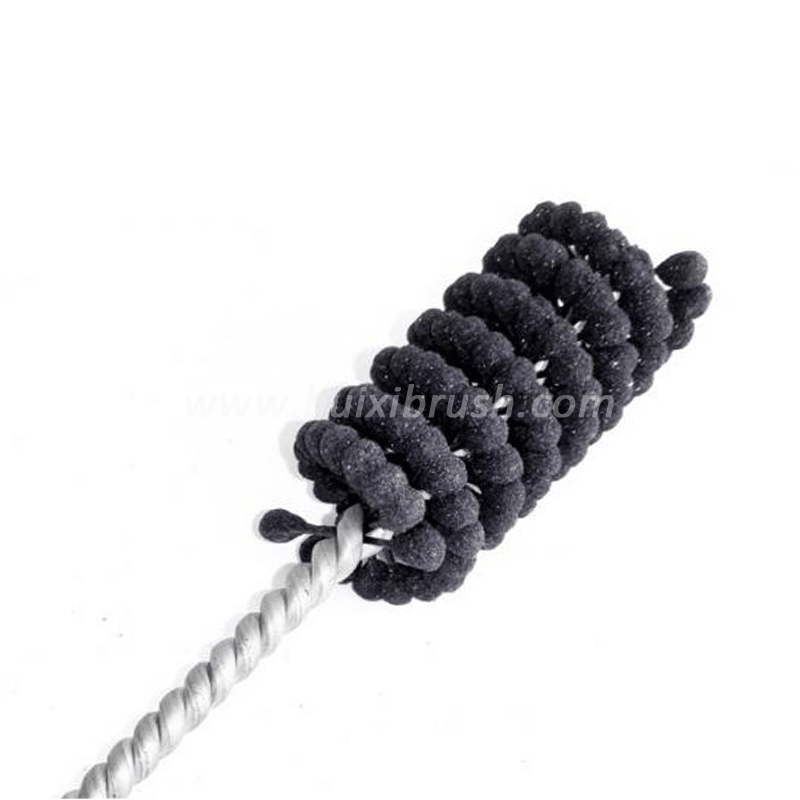
Silicon carbide nylon honing brushes usually outperform steel brushes for fine honing of cylinder bores because they remove material through multiple fine abrasive edges while the nylon carrier flexes to follow the bore wall. Steel wire brushes scrape and burnish the surface, which can tear soft cylinder materials, smear the bore wall, or leave broken wire pieces behind. The practical choice depends on bore material, starting finish, and the required crosshatch, but for fine surface refinement and controlled Ra or Rz improvement, abrasive nylon is the safer first option.
The useful comparison is not nylon versus steel for every honing job. It is silicon carbide abrasive nylon versus wire brushing when the bore is already machined and the goal is to remove light burrs, refine the surface, or create a uniform crosshatch without changing bore geometry.
Why Steel Brushes Are the Wrong Benchmark for Fine Bore Honing
Steel honing brushes are effective for breaking scale or cleaning corrosion, but their cutting behavior is not gentle. A wire filament contacts the bore as a point or edge and removes material by high local stress. On cast iron or aluminum cylinder bores, this can press surface peaks back instead of cutting them cleanly. The pressed material can later break loose or hold fine abrasive and cause scuffing. Wire brushes also shed broken filaments, which may embed in soft bore surfaces or contaminate downstream assembly.
In fine honing, the goal is to produce a controlled crosshatch pattern with a narrow finish range. A steel brush can cut unevenly as individual wire tips load up, break, or lose their set. Silicon carbide nylon brushes carry abrasive particles inside the filament itself, so each filament works more like a flexible abrasive stick than a scraper.

| Condition | Steel wire brush | Silicon carbide nylon honing brush |
|---|---|---|
| Material removal | Scraping and burnishing | Fine abrasive cutting with conformable contact |
| Surface finish risk | Can tear or smear soft metal | More uniform, less base material tearing |
| Filament behavior | Wires can break and embed | Filament flex follows the bore and wears gradually |
| Bore geometry control | Higher chance of local depth marks | Better suited to preserve bore size when brush OD is correct |
| Best use | Heavy rust, scale, and heavy material removal | Light burr removal, final surface refinement, crosshatch conditioning |
| Main limitation | Less suitable for soft cylinder surfaces | Lower stock removal than stone honing or heavy wire brushing |
How Silicon Carbide Nylon Honing Brushes Remove Material
A silicon carbide nylon honing brush works through two mechanisms: abrasive cutting and flexible pressure control. Silicon carbide grains are anchored in the nylon filament. As the brush rotates in the bore, the filament drags the grains across the surface and makes many small cuts instead of one deep scrape. Because nylon is elastic, the filament bends when pressure rises, which limits the depth of any single grain. The brush cannot easily dig in the way a stiff steel wire can.
The result is finer peaks and valleys. The exact finish depends on grit size, filament diameter, brush OD, rotation speed, and stroke rate. Finer silicon carbide grits leave smoother surfaces, while coarser grades remove more material but can leave deeper scoring. In cylinder bore work, many processes use a medium or fine grit brush as the final surface conditioning step after stone honing or roller burnishing.
Filament Flex, Bore Contact, and Crosshatch Control
The nylon filament is not just a carrier for abrasive. It controls contact area. Thicker filaments are stiffer and cut more aggressively. Thinner filaments flex more, allowing the brush to enter small bores and follow minor taper or ovality. A dense filament fill covers more bore surface per revolution, but too much fill can trap debris and raise brushing torque. A lower fill lets each filament work and clear material more easily.
Crosshatch is created mainly by the honing machine movement rather than the brush alone. In a rotary hone, the brush follows the existing crosshatch and refines the peaks. In a handheld or drill-driven operation, the operator controls stroke speed and reversal. A nylon brush is more forgiving of slight misalignment because the filaments bend instead of gouging. That is useful for bores with ports, oil holes, or stepped diameters where a rigid steel brush can catch an edge.

Bore honing with a rigid steel brush can leave a burr at the port intersection that later breaks free in service. <honing brush a magic tool for flexible burr removal> covers how flexible brush filaments remove edge burrs without hard tool contact.
Grit Selection and Brush Construction for Cylinder Bores
Selecting a silicon carbide nylon honing brush starts with the starting surface and the required finish. For removing light rust or broken burrs from a machined bore, a coarser grit may be needed. For final finish improvement on an already smooth bore, a fine grit is better. Grit alone is not the full specification. Filament diameter, stem diameter, trim length, and brush OD all determine how the brush loads and wears in the bore.
A brush with an OD slightly larger than the bore allows the filaments to flex against the wall and maintain contact as the brush rotates. If the OD is too small, contact pressure drops and the brush polishes instead of cutting. If the OD is too large, the brush may overwork the bore or make insertion difficult. For stepped bores or blind holes, the brush must be short enough to reach the target surface without the stem hitting the bore wall.
Huixi Brush builds these brushes with controlled filament density and silicon carbide grades so the same bore specification can be matched to the operation.

Dense nylon filament construction changes both cleaning action and brush life. <advantage of hx cylindrical nylon brushes> covers how cylindrical nylon brush design supports controlled contact and wear life.
Process Settings That Change the Result
Even the correct brush will produce poor results if speed, stroke, and time are wrong. Silicon carbide nylon honing brushes work best at controlled speeds that keep the filament tips engaged without overheating the nylon. Excessive speed can melt or glaze the filament surface and reduce abrasive action. Insufficient speed may produce only a polishing effect. The recommended speed depends on brush OD and bore material, so test with a small batch first.
Stroke control matters for through bores. A steady in-and-out movement prevents a banded finish and distributes wear along the filament length. For blind bores, dwell time must be limited because the bottom of the bore receives more contact. The operator should inspect the bore after a short cycle, check the finish pattern, and adjust time before the part reaches its final dimension.
Surface Finish Validation and Defect Prevention
The result of a nylon honing brush is not visible to the eye alone. Measure the bore finish with the same method used to qualify the part, whether that is a profilometer for Ra or Rz, bearing area checks, or bore gauge checks for size and roundness. Confirm the crosshatch angle and depth to make sure the brush refined the surface without erasing the oil retention pattern.
Inspect the bore after brushing for embedded abrasive or filament fragments, and clean the bore according to the normal production wash. If a steel brush was used in an earlier step, switch carefully. A mixed process can leave wire particles that fall into assembly. Silicon carbide nylon brush wear is more predictable because the filament erodes instead of breaking into sharp wire pieces. Track brush wear between batches by recording initial OD and surface finish after a fixed number of cycles.
For the bore entry and adjacent face, a disc brush is a separate tool for edge blending while the honing brush works inside the bore.

When Steel Brushes Still Make Sense
Steel wire brushes are not obsolete. They are better for heavy rust, thick scale, weld spatter, or rough cleaning where aggressive scrubbing matters more than fine finish control. On hard steel bores with heavy contamination, a steel brush can open the surface quickly before a nylon abrasive brush or stone hone refines it. The risk of embedded wire or surface tearing is less critical when the next process removes more material.
For aluminum or cast iron bores that are already near final size, the nylon abrasive brush is the safer finishing tool. The decision follows a simple rule: heavy contamination or heavy stock removal may justify steel, while fine finish, bore geometry preservation, and controlled crosshatch favor silicon carbide nylon.
A bore that is already near size should be conditioned, not re-cut. <honing brush treat burrs in barrel parts without affecting accuracy and scale> covers how flexible abrasive honing removes burrs while preserving part scale.
Specify the Brush for Your Bore Finish
Before ordering, confirm the bore material, bore diameter and length, current surface finish, required Ra or Rz, hone type, and whether the bore is through or blind. Also note whether the part has oil holes, ports, or steps that the brush must pass. A clear specification avoids overworking the bore and helps the brush supplier match filament diameter, silicon carbide grit, fill density, and brush OD.
Send these details to [email protected] or call +86 1580 0932 713. Huixi Brush supplies customized silicon carbide nylon honing brushes and can propose a brush based on your finish target and cycle time.
FAQ
Can a silicon carbide nylon brush replace a stone hone?
It can replace a final conditioning step, not heavy stone honing for bore size correction. The brush refines finish and light burrs after machining or stone honing. If the bore needs significant diameter change, a stone hone is still required.
Will silicon carbide nylon scratch aluminum cylinder bores?
A fine grit silicon carbide nylon brush under controlled conditions usually refines without deep scratching. Coarse grit or excessive speed can still mark soft aluminum, so test on a scrap bore and measure the finish before production.
How do I choose the right brush diameter for a cylinder bore?
Choose a brush OD slightly larger than the bore ID so the filaments flex against the wall. The required oversize depends on filament length and stiffness. For stepped or blind bores, also check that the stem and trim length reach the target area without rubbing.
How long does a silicon carbide nylon honing brush last?
Wear depends on grit, filament density, speed, bore material, and cycle time. Track brush OD and resulting finish after a set number of parts, and replace the brush when finish improvement drops below the target instead of waiting for visible breakage.
If you’re interested, check out these related articles:
abrasive disc brush an excellent industrial surface treatment tool
honing brush treat burrs in barrel parts without affecting accuracy and scale
abrasive wheel brush a magical tool for industrial surface treatment
where stainless wire spiral brush can be used


 Whatsapp
 Email