



Door Seal Strip Brush: PP vs Nylon for Industrial Door Sealing
Industrial door sealing is not only about closing a gap. It is about controlling dust ingress, air loss, insects, and noise while allowing the door to move without jamming or dragging. A door seal strip brush is a continuous brush strip mounted along the door edge or frame, with flexible bristles that deflect as the door closes and recover into the gap. The choice between polypropylene and nylon bristles is usually the first material decision and the one that most affects service life.
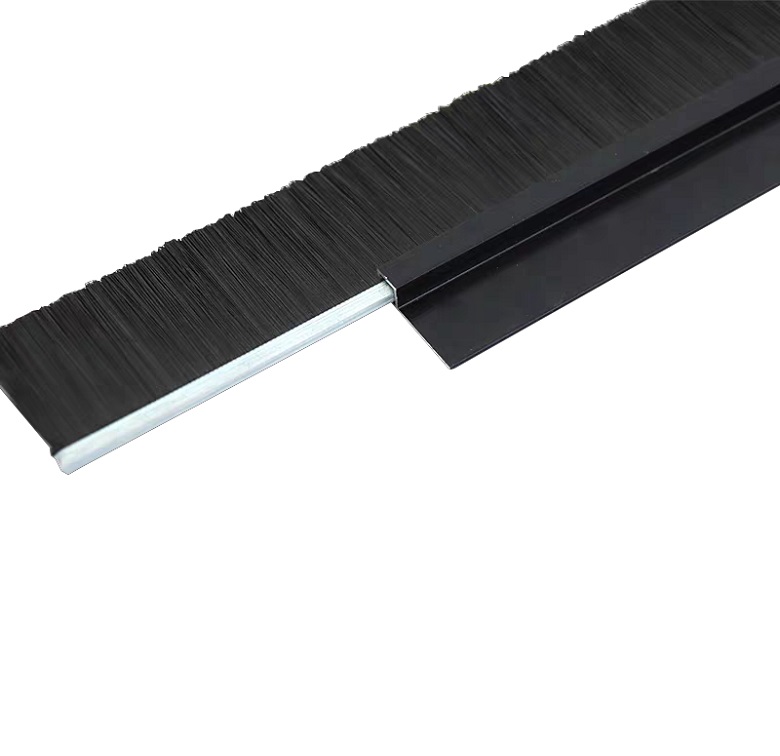
Both PP and nylon can seal a door gap, but they do not behave the same way under load, moisture, heat, and repeated movement. The right choice depends on how wide the gap is, how often the door opens, and what the brush must stop.
How Door Seal Strip Brushes Work
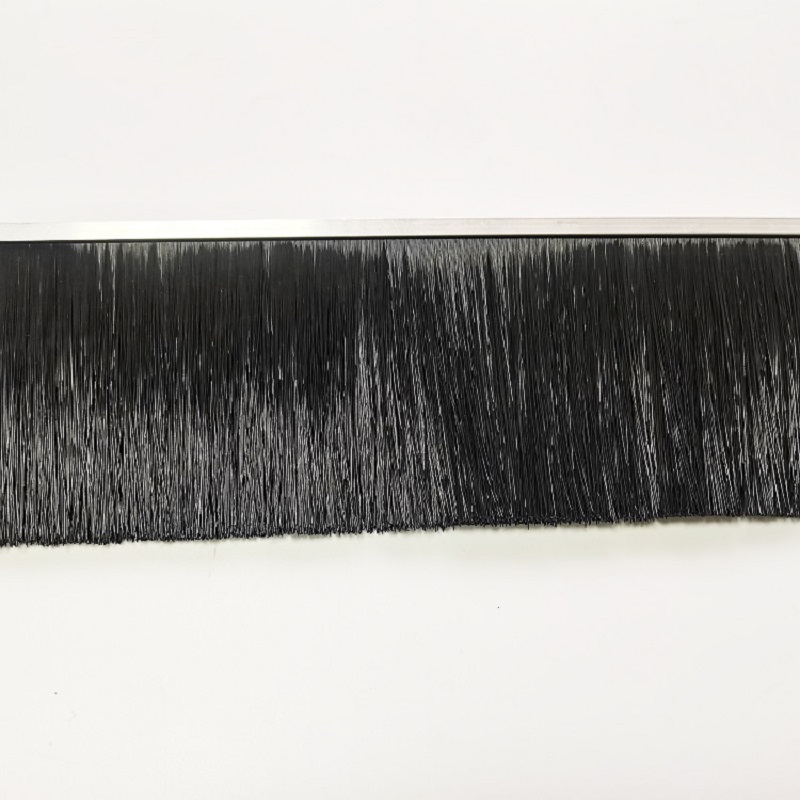
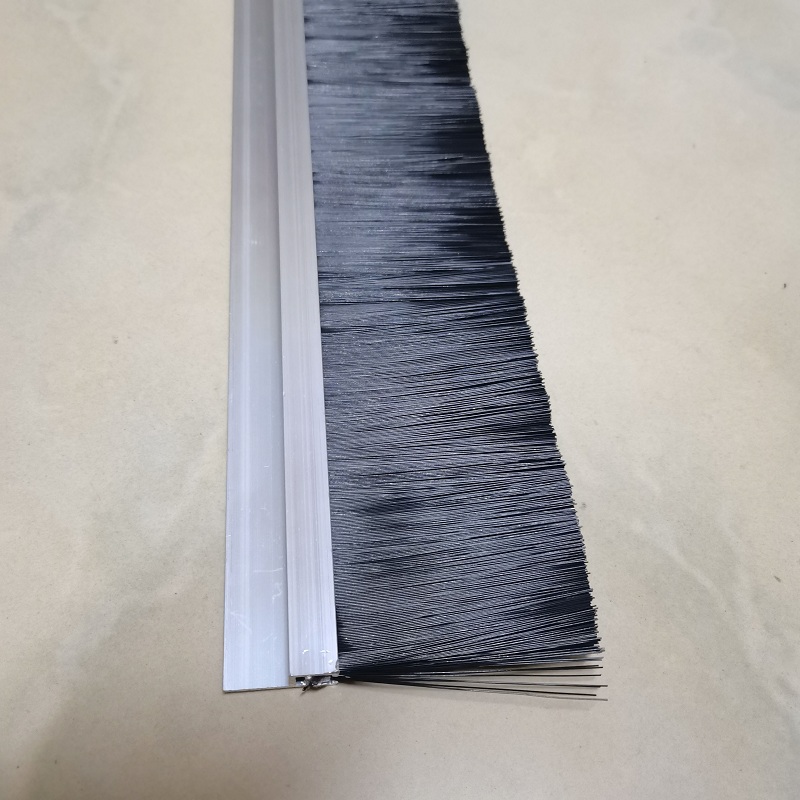
A door seal strip brush consists of a metal or plastic channel that holds a dense row of bristles. The bristles may be straight, wavy, or crimped, and the density can be adjusted by changing filament diameter and the number of filaments in the channel. When the door closes, the bristles bend to fill the gap; when the door opens, they should return to their original position. If the bristles do not recover, the seal becomes loose and stops blocking air and dust.
The three seal targets — dust, air, and insects — require different levels of fill density and deflection. Dust sealing needs enough filament contact to block fine particles. Air sealing needs a dense brush face that reduces the open area between bristles. Insect sealing needs the brush to close the gap completely along irregular floor or frame profiles. A door seal brush is normally specified by backing height, channel width, bristle material, bristle length, and overall length.
PP vs Nylon: A Materials-Level Comparison
PP is a low-cost thermoplastic with very low moisture absorption and good chemical resistance. In door sealing, PP is often selected for washdown areas, wet environments, or applications where chemical exposure is present. PP bristles are softer than nylon and are less likely to scratch mating surfaces. Under repeated flexing, however, standard PP may take a set more quickly than nylon, especially when the brush is heavily compressed.
Nylon is a tougher filament with better recovery and higher abrasion resistance. It is generally preferred where the door has variable gap dimensions or high cycle frequency. Nylon absorbs more moisture than PP, which can change stiffness under humid conditions, but it remains a strong choice for demanding mechanical sealing. Where the door edge is uneven or the brush must resist frequent deflection, nylon tends to recover more consistently.
Nylon filament performance depends on filament diameter, crimp, and base construction. <Main features and applications of HX nylon cylindrical brush> covers the key nylon brush variables that affect recovery and surface contact.
| Selection factor | PP | Nylon | Door sealing consideration |
|---|---|---|---|
| Moisture resistance | Excellent | Moderate; can absorb moisture | Wet or washdown areas often favor PP |
| Flexibility and recovery | Good | Very good | Uneven gaps and high cycles favor nylon |
| Abrasion resistance | Moderate | Higher | Abrasive dust or frequent contact favors nylon |
| Chemical resistance | Broad acid and alkali resistance | Good, but sensitive to some strong acids | Match filament to cleaning chemicals |
| UV and outdoor exposure | Fair without stabilizer | Fair-to-good with stabilizer | Specify UV-stabilized grade for exterior doors |
| Temperature resistance | Lower | Higher | Hot process doors usually favor nylon |
| Installed cost | Lower | Higher | Balance initial cost against replacement interval |
| Dust, air, and insect sealing | Good with dense fill | Good with dense fill; better recovery | Match fill density to the sealing target |
For comparative hardness, Shore/D durometer values can be referenced under ISO 868 [5], but hardness alone is less important than recovery and fill density for door seals.
Matching Filament to Sealing Task: Dust, Air, and Insect Control
For dust sealing, the brush must create enough filament contact to block fine particles while still allowing the door to operate. A denser brush face with shorter to medium bristle length usually performs better than a sparse, long-bristle brush. PP is often acceptable for dry, non-abrasive dust. Nylon is worth evaluating when the dust contains abrasive particles or when the brush is compressed by a heavy or misaligned door.
For air sealing, the main target is draft reduction. The brush face should present enough bristles to reduce the open area between filaments. Nylon is often the stronger choice because it recovers after repeated compression and maintains contact on uneven floors or door edges. PP can work for light draft control in clean, low-cycle environments.
For insect sealing, the brush must close the full gap. This usually calls for a dense fill, adequate trim length, and a flexible tip that conforms to the floor or frame. PP has low water absorption, which helps in humid entries. Nylon gives better recovery where the gap changes or where the brush is compressed by heavy traffic.
Where formal sealing performance is specified, the assembly may be evaluated against criteria derived from ANSI/BHMA A156.22 for door gasketing and edge seal systems [1]. For round gaps or sleeve penetrations on industrial doors, a cylindrical brush uses the same PP or nylon logic, but the mounting is different.
Key Selection Factors for Door Seal Strip Brushes
Before choosing PP or nylon, record the following operating conditions:
- Gap width and maximum gap variation
- Door type, speed, and opening frequency
- Operating temperature range
- Moisture, humidity, and washdown exposure
- Chemical or oil exposure
- Outdoor UV exposure
- Fire or smoke rating requirements
- Contact surface type and required brush interference
Temperature and fire requirements often push the decision toward nylon or a specialized heat-stable grade. Some industrial door assemblies are fire-rated, so sealing components should be evaluated with NFPA 80 requirements [2] and flame ratings such as UL 94 [4]. For exterior doors, weathering resistance is commonly assessed by accelerated exposure such as ISO 4892-2 [3], and a UV-stabilized filament grade should be specified.
If you already know the gap width, movement type, and environment, send those specifications to [email protected]. The engineering team can recommend a PP or nylon material, fill density, and channel profile, and can support sample testing before bulk production.
Mounting, Sizing, and Installation Checks
A strip brush seal is only as good as its mounting. Check the channel width, backing height, filament trim length, and the amount of interference against the mating surface. Too little interference leaves a gap; too much interference creates drag and shortens bristle recovery life. Fasten the channel securely along the full length, and use appropriate splices, end caps, and corner transitions where the door profile changes.
For curved or irregular openings, a flexible strip brush or formed strip brush may be required. The goal is continuous contact without noticeable open gaps at the ends or joints.
Channel size, filament length, and fill density all change how a strip brush conforms to a moving surface. <What you know about brass wire brush strip> covers the basic construction variables to check before specifying a strip brush.
For adjacent sealing or brushing worktables, the same channel and filament rules apply.
Request a Door Seal Strip Brush Recommendation
Before ordering, verify that the supplier can provide the filament material, density, backing material, and mounting configuration required for the door. A reliable supplier should be able to supply sample brush segments for trial mounting so the seal can be tested with the actual door, floor variation, and operating cycle.
For a selection recommendation, send the following information:
- Total gap width and maximum gap variation
- Door movement type and opening frequency
- Environmental exposure: dust, water, oil, chemicals, UV
- Required bristle length and channel dimensions
- Total length and mounting method
- Primary sealing target: dust, air, insect, or noise
Shanghai Huixi Trading Co., Ltd. supplies customized door seal strip brushes in PP, nylon, and other industrial filaments, with ODM/OEM support, low-MOQ samples, and engineering support. Send your requirements to [email protected] or call +86 1580 0932 713 for a material selection recommendation.
FAQ
Can PP and nylon door seal strip brushes be used interchangeably?
They can sometimes be substituted for light sealing, but they are not mechanically identical. PP is lower-cost and moisture-resistant, while nylon is tougher and recovers better under repeated flexing. For uneven gaps, abrasive dust, or high cycle rates, nylon is usually the safer choice.
Which material is better for outdoor industrial doors?
It depends on UV and moisture exposure. Both materials should be specified as UV-stabilized for exterior use. PP offers low moisture absorption, while nylon offers better recovery and wear resistance in demanding movement conditions.
How dense should a door seal strip brush be to block insects?
The brush should be dense enough to leave no visible open path through the bristle face. Short to medium filament length, a full channel fill, and continuous contact with the floor or frame are more important than filament material alone.
Does nylon absorb moisture and lose sealing performance?
Nylon can absorb moisture, which may change stiffness under humid conditions. In wet or washdown areas, PP may be more dimensionally stable. In dry, high-cycle applications, nylon often retains the recovery advantage.
What information is needed for a door seal brush quote?
A useful quote request includes gap width and variation, total length, bristle height, channel or backing dimensions, mounting method, operating environment, and the primary sealing function.
References
[1] ANSI/BHMA A156.22, Standard for Door Gasketing and Edge Seal Systems, Builders Hardware Manufacturers Association.
[2] NFPA 80, Standard for Fire Doors and Other Opening Protectives, National Fire Protection Association.
[3] ISO 4892-2:2013, Plastics — Methods of exposure to laboratory light sources — Part 2: Xenon-arc lamps.
[4] UL 94, Standard for Tests for Flammability of Plastic Materials for Parts in Devices and Appliances.
[5] ISO 868, Plastics and ebonite — Determination of indentation hardness by means of a durometer.
If you’re interested, check out these related articles:
how do you know about deburring brushes
advantage of hx boiler tube brush
brass brushes work perfectly for pipe cleaning


 Whatsapp
 Email