



Why Nylon Test Tube Brushes Beat Stainless for Lab Glassware
Nylon lab test tube brushes are the safer default for routine glassware and lab vessel cleaning because the bristles flex before they scratch. Unlike stainless wire, which can leave marks on glass and wear away markings over time, nylon filaments follow the contours of a tube and lift residue with lower contact pressure. That does not make stainless wire obsolete; it simply means stainless belongs on scale, corrosion, or hard contamination where the surface can tolerate abrasion. The right choice depends on what you are cleaning, how narrow the vessel is, and whether the part is glass, quartz, metal, or plastic.

What to Check Before Choosing a Lab Test Tube Brush
Before comparing nylon and stainless wire, confirm that the brush can enter the vessel safely. The core stem diameter must be smaller than the tube opening, but not so thin that the brush folds under pressure. Bristle length, or trim length, should be enough to contact the opposite wall without forcing the operator to scrape the stem against the glass. The handle should provide a secure grip even when wet, and the core wire should be fully covered at the brush tip. In a laboratory setting, exposed steel wire at the tip or along the stem is a common source of scratches.
| Selection factor | Nylon test tube brush | Stainless wire test tube brush | Practical conclusion |
|---|---|---|---|
| Surface contact | Soft and flexible on glass | Hard point contact that can score glass | Nylon is safer for routine glassware |
| Typical residue | Media, powders, oils, protein films | Baked-on minerals, corrosion, hard scale | Match the brush to the residue type |
| Marking safety | Preserves printed markings longer | Can abrade markings and etch lines | Nylon protects traceability markings |
| Chemical exposure | Requires correct nylon grade | More tolerant of high heat and some solvents | Confirm compatibility with each cleaning solution |
| Tip safety | Usually molded or covered | May expose cut wire at the tip | Inspect the tip before every use |
| Risk to narrow tubes | Low when correctly sized | Higher if the stem contacts the wall | Select a brush that fills the bore without force |
Why Nylon Bristles Protect Glassware Better Than Stainless Wire
The main advantage of nylon is mechanical. When a nylon bristle meets glass, it bends, the contact area spreads, and the force stays distributed across the surface. Stainless wire behaves differently: each wire is stiff and ends in a small contact point, so the same hand pressure is concentrated over a much smaller area. That concentrated pressure is what creates fine scratches on glass rims, inner walls, and especially on ground glass joints or printed graduations. Once a scratch forms, it can trap contamination and make future cleaning more difficult.
Nylon also works well in narrow vessels because the bristles recover their shape after passing through a constriction. The fill can be dense enough to sweep the full inner diameter while still yielding when the brush reaches the bottom of the tube. This is why nylon lab test tube brushes are generally better for volumetric flasks, sample vials, and delicate glassware than a wire brush would be.
Nylon filament selection also affects how evenly a cylindrical or tube brush loads against the vessel wall. <advantage of hx cylindrical nylon brushes> covers how nylon cylindrical brush characteristics support controlled contact and longer working life.
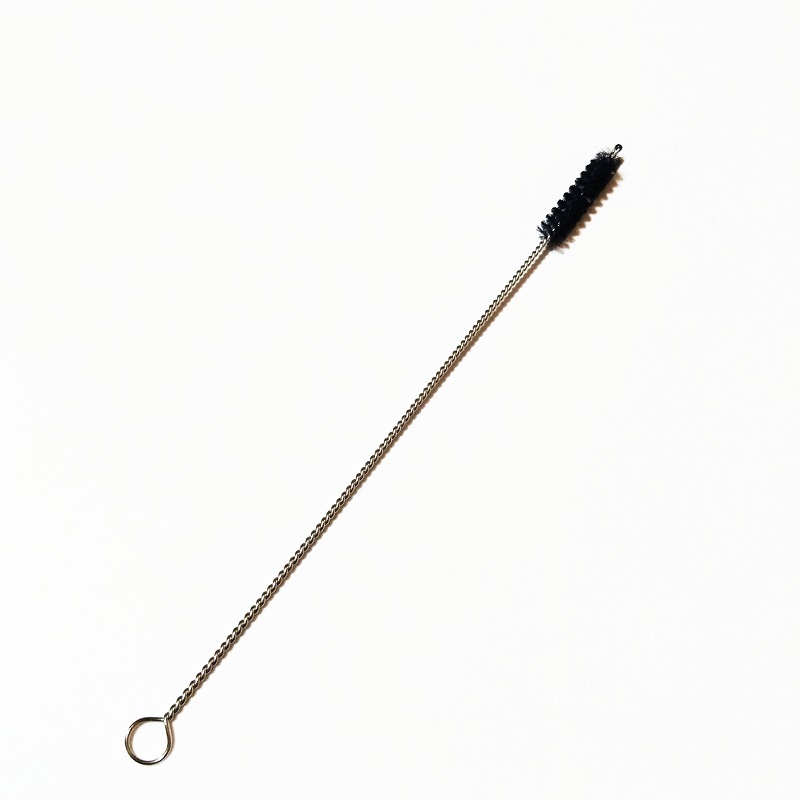
The protection is not absolute. A worn nylon brush that has picked up glass fragments, abrasive powder, or hardened grit can scratch almost any surface. The safety of nylon comes from using a clean brush, selecting the right filament diameter for the tube, and replacing the brush after visible wear or contamination.
When Stainless Wire Still Has a Place in the Lab
Stainless wire test tube brushes remain useful when the contact surface is metal or when residue is too hard for nylon to move. They can remove corrosion, mineral deposits, or baked-on scale from metal tubes, condenser shells, and process fittings. In those cases, the goal is not surface preservation but contaminant removal, and the harder bristle is an advantage.
For glassware, stainless wire is rarely the right default. Even if borosilicate glass is harder than ordinary soda-lime glass, a stainless brush can still mark the surface, particularly at the rim or when abrasive particles become trapped between the wire and the glass. Stainless is better reserved for glass parts that are already damaged or for non-glass laboratory equipment where dimensional accuracy and visual finish are less important.
Stainless wire can still be the correct choice where the surface is metal and hard residue removal matters more than visual finish. <where stainless wire spiral brush can be used> covers the industrial conditions that favor stainless wire spiral brushes.
How Brush Core and Handle Design Affect Wet Lab Safety
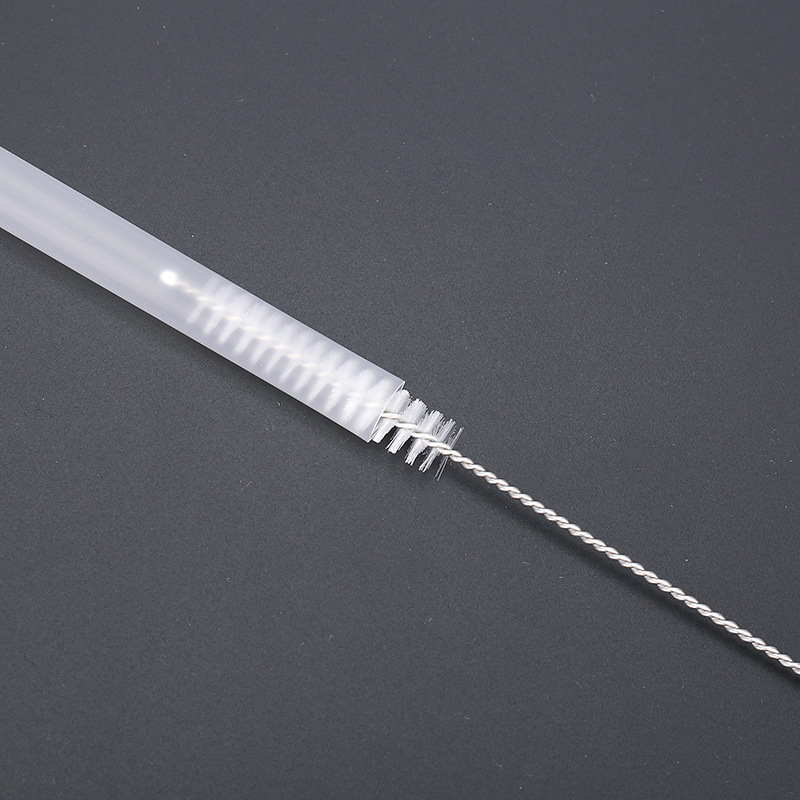
The bristle material is only one part of the risk. A nylon test tube brush with an exposed steel core can scratch glass even when the bristles are soft. The tip must be covered, the stem should not protrude beyond the last bristle section, and the core should be stiff enough to control the brush without snapping. For narrow tubes, a twisted stem that is too flexible can bend sideways and push the bristle root or cut wire end into the glass wall.
Handle design matters as much as the filament. In a wet lab, the handle must stay secure even with gloved or soapy hands. A longer handle keeps the hand clear of cleaning agents, while a short handle gives more control in small tubes. For repeated washing, a reusable brush with a chemical-resistant handle is more consistent than a disposable brush with a thin wire loop at the end.
For high-throughput lab support areas, a drill brush can clean the outside of beakers, trays, or equipment housings, but it is not a substitute for a test tube brush inside narrow glassware. Powered brushing inside a test tube increases the chance of stem contact and local heating.
For lab and light production vessels, a reusable nylon brush usually fits better than a disposable wire stem brush. <main features and applications of hx nylon cylindrical brush> covers the main uses and working characteristics of HX nylon cylindrical brushes.

A Practical Selection Checklist for Gentle Lab Vessel Cleaning
Use this checklist before ordering or issuing a brush:
- Measure the tube inside diameter and the working length.
- Choose nylon filament unless the residue is hardened scale or the surface is metal.
- Confirm that the stem diameter is small enough to prevent side contact.
- Check that the brush tip is fully covered and the core wire is not exposed.
- Select a bristle length that fills the tube without requiring heavy force.
- Keep separate brushes for glassware and for abrasive powders or metal parts.
One more check is often missed: after cleaning, rinse the brush and look for embedded particles. A brush that has been used on a metal part should not go back into volumetric glassware unless it has been cleaned and inspected.

Common Glassware Cleaning Mistakes That Cause Scratches
The first mistake is using a stainless wire brush because it feels faster. On glass, the time saved is lost later through damaged markings, roughened inner walls, and harder future cleaning. The second mistake is using an undersized brush that forces the stem against the tube wall. The third mistake is sharing one brush between abrasive cleaning and sensitive surfaces. The fourth is continuing to use a brush after the bristles flatten, splay, or change color, which usually means the filament is worn or contaminated.
These failures are easiest to prevent by assigning brushes by task. A dedicated nylon brush for test tubes, a separate brush for glassware exposed to abrasive media, and a stainless brush only for metal fittings will reduce scratches and extend the useful life of the glassware.
Get a Lab Test Tube Brush Recommendation for Your Vessel Range
Tell us the tube inside diameter, length, vessel material, residue type, cleaning method, and whether the brush must withstand autoclaving or solvent exposure. We can specify a nylon test tube brush with the right stem diameter, bristle fill, trim length, and tip protection, and quote sample or production quantities. Contact Huixi Brush at [email protected] or +86 1580 0932 713.
FAQ
Can stainless wire test tube brushes be used on borosilicate glass?
They are usually not needed and are not recommended for routine borosilicate glassware. Although borosilicate glass is harder than many other glasses, stainless wire can still scratch the rim or inner wall, especially if abrasive particles are trapped between the wire and the glass. Stainless is better for metal tubes or hardened scale where surface damage is acceptable.
Which nylon filament diameter is best for narrow test tubes?
The best diameter depends on the tube bore. The brush should fill enough of the bore for effective bristle contact, but it should not require heavy force to insert. For very narrow tubes, softer fine filaments reduce stem bending and lower the risk of side contact. The correct fit matters more than a single filament diameter.
How do I clean and store nylon test tube brushes?
Rinse the brush immediately after use, remove any trapped particles, and allow it to air dry. Keep brushes used with abrasive powders separate from brushes used on sensitive glassware. Replace the brush when the bristles flatten, splay, or show signs of contamination. Autoclave only if the filament and handle grades are rated for that cycle.
Are nylon test tube brushes compatible with solvents?
Not universally. Nylon can handle many dilute cleaners, but strong acids, acetone, phenol, or high-temperature solvent exposure can degrade certain grades. Confirm compatibility with the brush manufacturer for the exact solvent, concentration, and temperature before use, and do not assume that a nylon brush is chemically inert.
Do volumetric flasks need a different brush?
Often yes. A brush that reaches the bottom of a volumetric flask may also scrape the neck or etch the inner wall. Use a soft dedicated brush or gentle agitation with a suitable cleaning solution. For critical volumetric glassware, a no-contact cleaning method is sometimes safer than forcing any brush through the neck.
If you’re interested, check out these related articles:
rope cleaning brush for industrial use a key tool for maintaining safe production
what you know about brass wire brush strip
abrasive disc brush an efficient tool for many applications


 Whatsapp
 Email