



Disc Brush Selection: Polishing, Deburring, Edge Finishing
Disc brush selection starts with the workpiece and machine, not with abrasive grit alone. A brush that removes a heavy burr on steel can still leave an uneven edge on aluminum if the filament diameter and trim length are wrong for the part geometry. This article walks through the specification choices that matter for surface polishing, deburring and edge finishing: abrasive fill, filament diameter, density, face width, and speed limits. The goal is a brush that keeps edge quality consistent across a mixed batch without rework or machine changes.
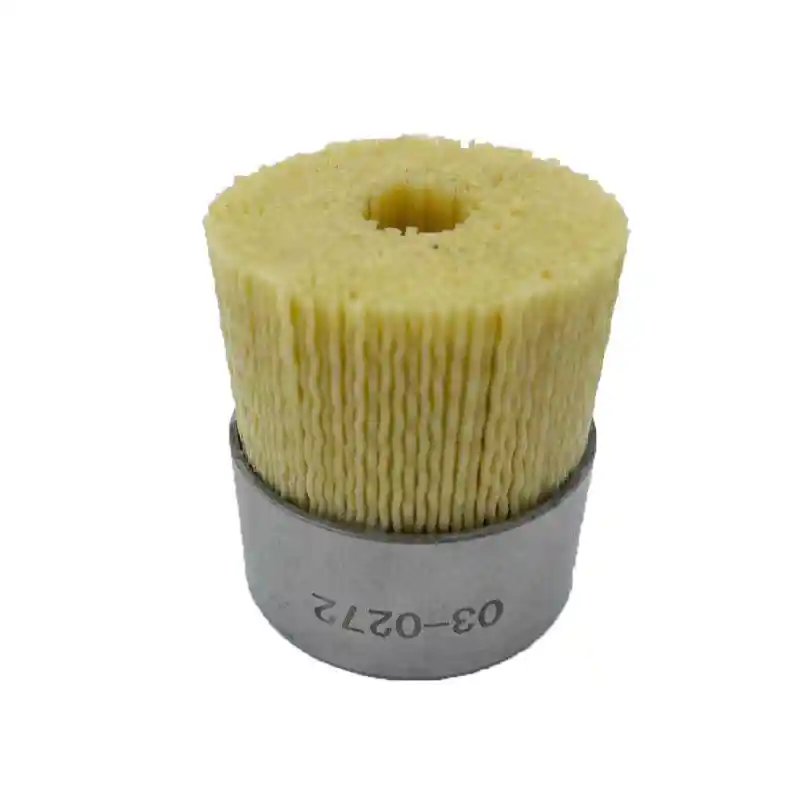
Disc Brush Construction Determines Finish Quality
A disc brush looks simple, but finish quality comes from the relationship among face width, trim length, filament diameter, and fill density. Face width controls how much of the part surface contacts the filaments at one time. Narrow face widths put more pressure on a small area and work well for edge breaks. Wide face widths cover flat surfaces faster but can reduce the filament pressure needed to reach into corners.
Trim length is another specification that buyers often set too short. Longer trim filaments flex around corners and let the brush follow a cast or machined edge. Shorter trim filaments feel more aggressive because they bend less and transmit more pressure. The tradeoff is that an aggressive short trim disc brush can also cut the edge radius unevenly when the part has steps or intersecting bores.
Filament diameter sets the lower limit of the edge radius the brush can hold. In production reviews, I start with the smallest edge radius on the drawing. If the drawing calls for a 0.2 mm edge break and the brush is filled with 0.8 mm abrasive filaments, the brush will ride over the corner instead of cutting it. That mismatch often appears later as a sharp edge that only shows up after coating or assembly.
Density matters in both directions. Low density lets filaments separate and follow an irregular surface. High density creates more cutting points and increases stock removal, but it also makes the brush face stiffer. For mixed part families, mid density with a longer trim usually holds finish longer because the brush wears gradually instead of rounding off.
When the goal is surface treatment rather than heavy material removal, filament geometry matters more than motor power. <abrasive disc brush an excellent industrial surface treatment tool> covers how abrasive disc brushes deliver controlled edge finishing on industrial workpieces without cutting into the base material.
Workpiece Material and Machine Speed Set the Disc Brush Specification
A disc brush specification cannot be separated from the machine it runs on. Aluminum, stainless steel, and alloy steel respond differently to the same abrasive. A brush that produces a clean edge on cold rolled steel may load or smear on aluminum if the grit is too fine and the spindle speed is too high. Before changing the brush, I check the surface speed the machine actually produces, not the motor nameplate. Spindle speed, tool holder runout, and part feed rate all change the contact pattern.
Wet or dry operation changes the choice too. Lubricated finishing keeps heat down and extends filament life, but it also reduces abrasive cut. Dry operation is simpler for many deburring cells, but it demands lower speed and more attention to heat buildup on heat treated parts.
Most disc brush suppliers publish a maximum RPM for a given outside diameter. That number exists because centrifugal force can throw filaments outward and permanently change the brush face. Exceeding the limit produces the same failure as a specification error: the brush face opens up, the working diameter grows, and the edge finish becomes unpredictable.
For mixed aluminum and steel production, I usually split the specification into two brushes rather than forcing one brush to cover both materials. The aluminum brush uses a softer abrasive grade and a longer trim. The steel brush uses a more aggressive grade and a tighter face. The extra tooling cost is almost always lower than the rework created by running one compromise brush across both materials.
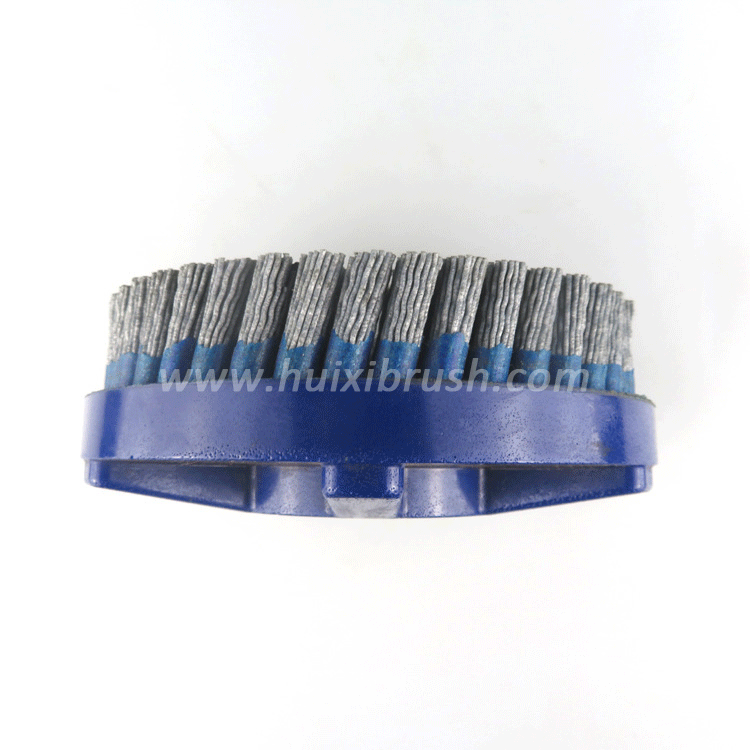
Abrasive Disc Brush Fill Materials Compared for Surface Finishing
The fill material sets the cutting character of a disc brush. The table below separates the common options by what they do well and where they fall short for polishing, deburring and edge finishing.
| Fill material | Strongest use | Edge finish behavior | Speed consideration |
|---|---|---|---|
| Abrasive nylon with silicon carbide | Deburring and edge breaking on steel and aluminum | Produces a matte, radiused edge with controlled cutting | Run at moderate surface speed to avoid filament glazing |
| Abrasive nylon with aluminum oxide | Light deburring and surface polishing on softer metals | Leaves a smoother finish with less edge change | Works well at lower pressure and dry operation |
| Crimped steel wire | Heavy scale, weld spatter and deep rust removal | Can reshape the edge if wire is too thick | Lower speed reduces wire fatigue and breakage |
| Stainless steel wire | Stainless and nonferrous surfaces where carbon pickup is a concern | Preserves edge dimensions with less contamination risk | Match wire diameter to the smallest corner radius |
| Brass wire | Delicate surfaces and non-sparking cleaning | Produces a soft finish with minimal stock removal | Low surface speed limits heat and wire flattening |
A single disc brush can move between deburring, surface blending and light polishing if the abrasive grade and face width are matched to the part. <abrasive disc brush an efficient tool for many applications> covers the application range where abrasive disc brushes replace multiple manual finishing steps.
If your line switches between two alloys and the current disc brush is leaving one edge condition out of tolerance, the machine speed may be overriding the abrasive choice. Send the spindle speed and part drawing to [email protected] or call +86 1580 0932 713, and we can confirm whether the face width or filament diameter needs adjustment.
Disc Brush Customization and Production Failure Prevention
Disc Brush Failures on Mixed Production Lines
The most common disc brush failure I see is not worn abrasive. It is a brush that was specified for one part and then released for a broader part family. A dense face that breaks edges perfectly on a machined steel housing can leave deep scratches on a cast aluminum cover because the pressure per filament is too high. When that happens, the line slows down and the operator compensates by changing the tool path. The root cause is density and trim length, not the machine.
Another failure comes from arbor sizing. A disc brush with an oversized bore may center poorly on the spindle, creating vibration and uneven wear. I have seen stable machines produce inconsistent edges because the brush hub had too much radial movement. Checking arbor fit and runout before changing abrasive usually removes half of the noise in the process.
Burr size is not always visible until a part reaches assembly, and that is where many brush choices fail. <how do you know about [deburring brush](https://www.huixibrush.com/deburring-brush/)es> covers what to check before selecting a deburring brush for inner edges and drilled intersections.

Disc Brush Customization Points for an Existing Spindle and Drawing
For most OEM and maintenance buyers, a standard disc brush is close but not exact. The four points I confirm before ordering a custom brush are outside diameter, arbor hole or drive hub, face width, and trim length. After those are fixed, the abrasive type and grit follow from the workpiece material. Huixi Brush can match a disc brush to an existing spindle and part drawing, including nonstandard arbor sizes and mixed filament densities. This usually matters when the line already has tooling that cannot be changed.

Disc Brush Selection Support for Your Production Line
After the first article fails, the real cost is not the brush. It is the line downtime and the edge inconsistency that moves downstream to coating, assembly, or a customer inspection. Most production teams can resolve that by confirming four numbers: spindle speed, part material, edge radius allowance, and required batch size. Send your part drawing and those four numbers to [email protected] or call +86 1580 0932 713. We will review the application and return a disc brush specification for sampling on your line.
Common Questions About Disc Brush Selection
When should abrasive nylon replace wire in a disc brush?
Abrasive nylon is the better starting point when the part needs a controlled edge break or surface blend without heavy material removal. The abrasive grains are bound in the filament, so the brush cuts more like a flexible grinding tool than a wire brush. Wire is better for scale, weld spatter, or deep rust where a stiffer scratch pattern is acceptable. If the drawing calls out a specific edge radius and the base material is aluminum or machined steel, abrasive nylon usually holds the dimension better.
What if the disc brush leaves uneven edge breaks on a mixed aluminum and steel run?
It depends on where the variation appears. If the steel edges are clean but the aluminum edges are sharp, the abrasive grade or filament diameter is too aggressive for the softer material. If the variation follows tool holder or spindle position, the arbor fit or machine runout is the likely cause. Split the specification into two brushes when the material list cannot be changed. One brush for steel and one for aluminum gives a more stable process than a single compromise disc brush.
How do I know if the face width is too wide for edge finishing?
Start with the smallest edge feature the brush must reach. If the face width covers the edge and a large flat surface at the same time, the flat surface can carry too much contact pressure and the edge break becomes inconsistent. In our line reviews, we take the smallest edge radius and keep the face width close to that feature width. A narrow face concentrates pressure on the edge, but too narrow a face will wear quickly and increase cycle time.
Can a disc brush be ordered to match an existing spindle bore?
Yes, and this is one of the easier customizations. We can set the arbor hole or drive hub to the machine spindle and adjust the disc brush outside diameter to the tooling envelope. If the application has a nonstandard bore or a specific mounting flange, share the spindle drawing with us and we will confirm the hub fit before cutting tooling. For a sample quote, send the spindle drawing and batch size to [email protected].
If you’re interested, check out these related articles:
wire wheel brush the right assistant for industrial cleaning and polishing
advantage of hx cylindrical nylon brushes


 Whatsapp
 Email
Email