



Why Soft Nylon CPAP Tube Brushes Are Safer Than Wire Brushes
Soft nylon CPAP tube brushes are safer than wire brushes for routine respiratory hose sanitizing because they remove biofilm and residue without scratching, gouging, or leaving metal fragments inside a thin-walled flexible tube. A CPAP hose is not a rigid industrial pipe. Its inner wall is designed to stay smooth so moisture, skin oils, and microbial films do not become trapped in surface defects. Cleaning should therefore favor controlled mechanical contact, not aggressive scraping. Wire brushes may appear stronger, but that strength creates the main risk: the cleaning tool itself can damage the surface it is supposed to protect.
Why Wire Bristles Create More Risk in a CPAP Hose
CPAP tubing is usually made from flexible plastic or silicone, and repeated use exposes the inner wall to moisture, warm air, and organic residue. When a wire brush is pulled through the hose, each metal filament tip acts like a small scraper. The tips can leave fine scratches, especially at bends where the brush presses harder against the wall. Those scratches are difficult to see but can give residue and microbes a place to collect.
A second risk is bristle breakage. Thin steel wire can fatigue when the brush is bent through a curved hose, and a broken metal bristle can remain inside the tube. The user may not notice the fragment before the next use. In industrial metal pipe cleaning, that may be acceptable because the pipe is hard and the airflow path is different. In a respiratory hose, loose metal is a contamination and safety concern.
A third issue is core design. Many wire brushes use a metal stem or twisted wire core. If the core is exposed at the tip or if the stem is too stiff, it can press against the hose wall during insertion and withdrawal. The result is not just surface wear but a greater chance of puncturing or stretching the tubing.

How Soft Nylon Cleans Without Scratching
Soft nylon works differently. Nylon filaments flex under light pressure, so the brush can follow the hose wall without carving into it. The cleaning effect comes from bristle contact, water, and a mild cleaning solution. The bristles loosen residue, and the rinse carries it away. The brush supports sanitizing by removing the soil layer that protects microbes, but the brush itself is not a disinfectant. It needs to be used with the cleaning method recommended for the CPAP equipment.
Because nylon is nonmetallic, it does not rust or corrode after repeated exposure to water. It also dries faster and is less likely to leave staining or oxidized particles. For a CPAP hose, the goal is predictable, repeatable contact without progressive damage to the tube.
| Risk factor | Wire brush | Soft nylon CPAP brush |
|---|---|---|
| Surface contact | Metal tips may scratch or gouge | Filament tips flex and deflect |
| Moisture exposure | Carbon steel can rust; thin wire may fatigue | Nylon resists water and mild detergents |
| Debris risk | Broken wire bristles can remain in the hose | No metal fragments from filament wear |
| Core flexibility | Stiff core may strain the bend | Flexible core can follow the hose path |
| Cleaning action | Aggressive scraping can remove tube material | Gentle agitation loosens residue |
| Suitable location | Hard metal pipe or heavy scale removal | Thin-walled medical or respiratory tubing |
Power brushing is not required for routine CPAP hose cleaning. A drill brush or a disc brush adds speed, but it also adds uncontrolled contact pressure. For a flexible respiratory tube, manual brushing is easier to control and reduces the chance of wall damage.

Why Core Design and Bristle Retention Matter
The brush core is just as important as the bristle material. Some nylon tube brushes use a twisted wire core with the metal fully covered by the filament row. Others use a polymer core or a plastic-coated core to avoid exposed metal ends. For CPAP use, the safest design keeps all metal components away from the hose wall and protects both ends of the brush.
A soft nylon CPAP brush depends on the same controlled filament geometry as many industrial nylon tube brushes. <main features and applications of hx nylon cylindrical brush> covers the main features and application considerations for nylon cylindrical brushes.
Nylon also tolerates repeated wetting, bending, and detergent exposure better than unprotected carbon steel or thin stainless wire. The bristles should be firmly retained so they do not pull out during back-and-forth strokes. A smooth loop handle or tab helps the user keep control without compressing the tube.
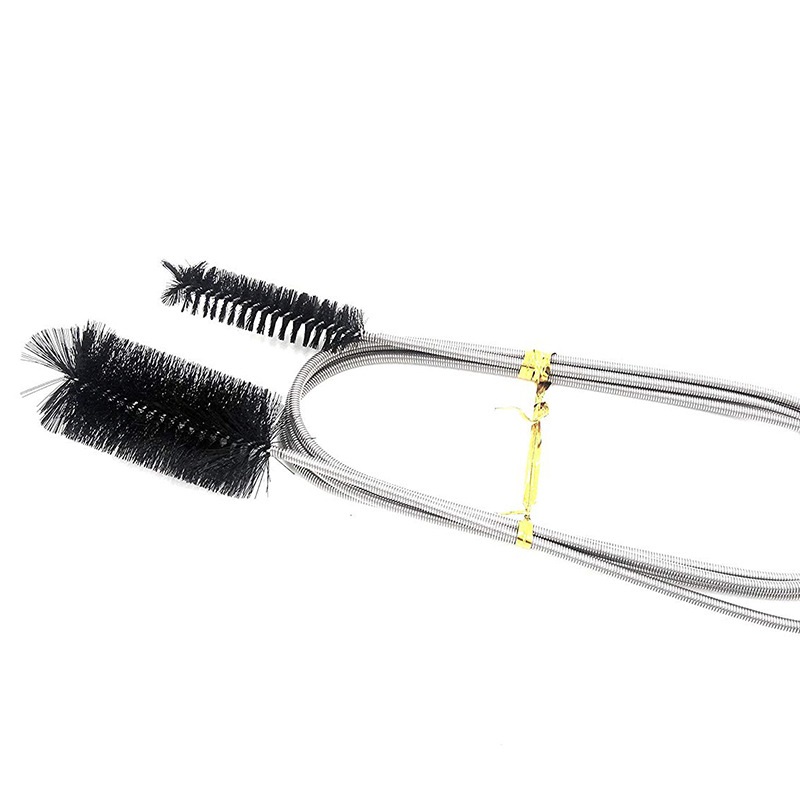
A Practical CPAP Hose Cleaning Sequence
The brush works best as part of a consistent cleaning routine. Follow the CPAP device manufacturer’s instructions for cleaning frequency and any approved solution. The following sequence is a general maintenance approach, not a replacement for clinical infection-control protocol.
- Disconnect the hose from the CPAP machine and mask.
- Rinse the inside of the hose with warm water to remove loose residue.
- Apply a mild cleaning solution according to the equipment instructions.
- Insert the soft nylon brush and pass it through the full hose length using controlled back-and-forth strokes.
- Pay extra attention to bends where residue tends to collect.
- Rinse thoroughly until no cleaning solution remains.
- Hang the hose to dry completely before reconnecting it.
Do not force the brush through resistance. If the brush will not pass easily, the diameter may be too large or the core may be kinked.

What to Check Before Selecting a Tube Brush
The right brush matches the hose inner diameter, tube length, and bend radius. A brush that is too large increases insertion force and can stretch the tubing. A brush that is too small leaves uneven wall contact and reduces cleaning effectiveness.
Check the following points before ordering:
- The brush outer diameter should be close enough to the hose inner diameter to provide contact without forcing.
- The brush length must cover the full hose, including the section behind the cuff if needed.
- The core should be flexible enough to pass through curved tubing without kinking.
- The tip should be smooth and free of exposed wire or sharp metal.
- The handle or pull loop should be easy to grip and clean.
- The filament type should be soft nylon or another nonabrasive polymer intended for sensitive tubing.
Selecting a brush for repeated wet cleaning depends on filament retention and corrosion resistance, not only diameter. <advantage of hx cylindrical nylon brushes> covers the advantages of nylon cylindrical brushes for sensitive internal cleaning applications.
Huixi Brush, for example, supplies customized nylon tube brushes with controlled filament diameter, length, and core construction for internal cleaning applications. When the hose size or cleaning requirement is unusual, a custom brush is often more effective than adapting a generic brush.

When a Wire Brush Is Still the Better Choice
Wire brushes remain useful in applications where the surface is hard and the cleaning objective is heavy material removal. Metal pipes, engine components, weld preparation, and industrial scale removal can tolerate aggressive contact. In those cases, a wire brush may work faster and last longer than nylon.
A CPAP hose is the opposite type of application. The tube wall is delicate, the contamination risk is serious, and the cleaning goal is residue removal rather than abrasive descaling. For respiratory equipment, soft nylon is the safer default because it protects the surface while still providing effective mechanical cleaning.
Confirming Your CPAP Tube Brush Requirements
If you are sourcing soft nylon CPAP tube brushes or need a custom brush for respiratory equipment cleaning, send the hose inner diameter, tube length, required brush length, core type, and any packaging or compliance requirements. Shanghai Huixi Trading Co., Ltd. can review the specification and propose a suitable nylon brush construction. Contact [email protected] or +86 1580 0932 713.
FAQ
Can I use a wire brush if I rinse the CPAP hose carefully afterward?
It is not recommended. Rinsing helps remove loose residue, but it cannot repair fine scratches or reliably remove every broken metal fragment. The safer choice for a flexible respiratory hose is a soft nylon brush with a protected core and no exposed metal tip.
What brush diameter should I choose for a CPAP hose?
Match the brush outer diameter to the hose inner diameter. The brush should make light contact with the wall without requiring force. If insertion resistance feels high, stop and check the size. A brush that is too small may leave part of the wall uncleaned, while one that is too large can stretch or damage the tubing.
How often should a CPAP tube brush be replaced?
Inspect the brush before use and replace it when the bristles flatten, the core kinks, the tip coating wears, or the handle becomes difficult to clean. Repeated wet use and bending degrade any brush over time, so replacement depends on visible condition and cleaning frequency rather than a universal interval.
Does the nylon brush sanitize the hose by itself?
No. The brush removes residue and helps the cleaning solution reach the tube surface, but it is not a disinfectant. Use the brush with the cleaning or sanitizing method recommended by the CPAP equipment manufacturer and the solution supplier.
If you’re interested, check out these related articles:
brushes for steel wire industries cleaning descaling derusting polishing
honing brush treat burrs in barrel parts without affecting accuracy and scale


 Whatsapp
 Email