



Nylon vs Metal Wire Cleaning Brushes for Surface Washing
Nylon vs Metal Wire: What Changes on the Wash Line
Manufacturing surface washing covers coolant removal, swarf clearing, light oxide removal, dust control, and process residue cleaning on metal, plastic, and coated parts. The filament decision often comes down to nylon versus metal wire. The wrong choice shows up quickly as scratched workpieces, short brush life, or unstable line performance.
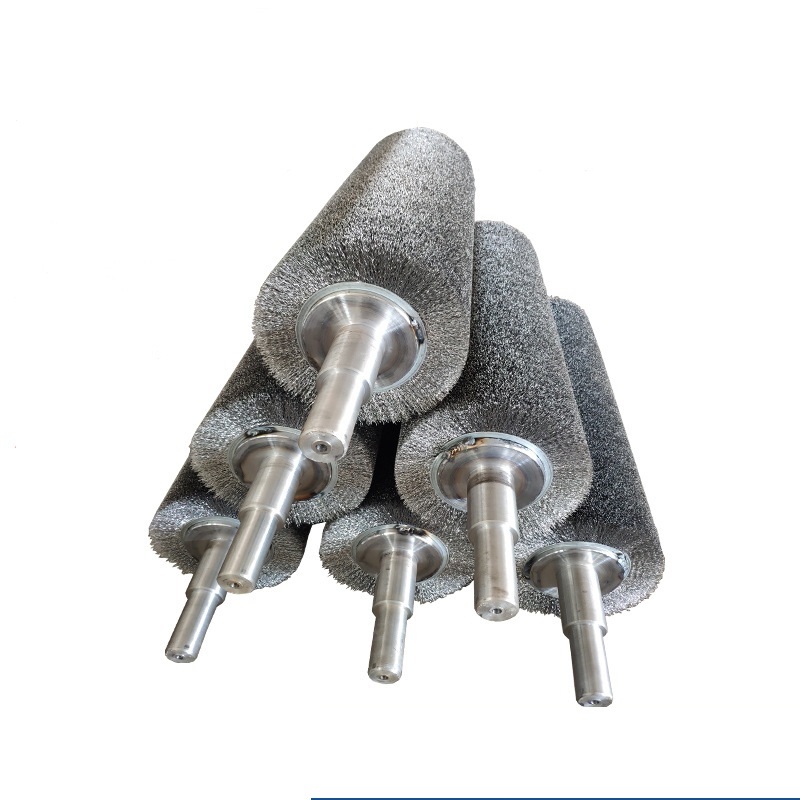
Nylon cleaning brushes usually provide the better balance when the line needs consistent cleaning without changing the part surface. Abrasive nylon adds controlled cutting action for light deburring and oxide removal. Metal wire brushes remain the right tool when the surface carries heavy rust, mill scale, or weld slag that requires aggressive scraping and impact [1].
Filament Comparison: Plain Nylon, Abrasive Nylon, and Metal Wire
Plain Nylon Filament
Plain nylon filaments are tough, non-rusting, and resistant to water, oils, and most common machining fluids. They clean by flexing and wiping rather than by cutting, so they are safer for anodized aluminum, plated surfaces, soft alloys, and machined seals. The main limitation is that plain nylon does not remove rust or heavy scale.
Abrasive Nylon Filament
Abrasive nylon filament contains bonded silicon carbide or aluminum oxide grains throughout the filament cross-section. As the filament wears, new abrasive grains are continuously exposed, so the brush keeps working instead of dulling like a coated abrasive. This is the preferred option for light burr removal, surface blending, and oxide-free finishing on automated washing lines [2].
Metal Wire Filament
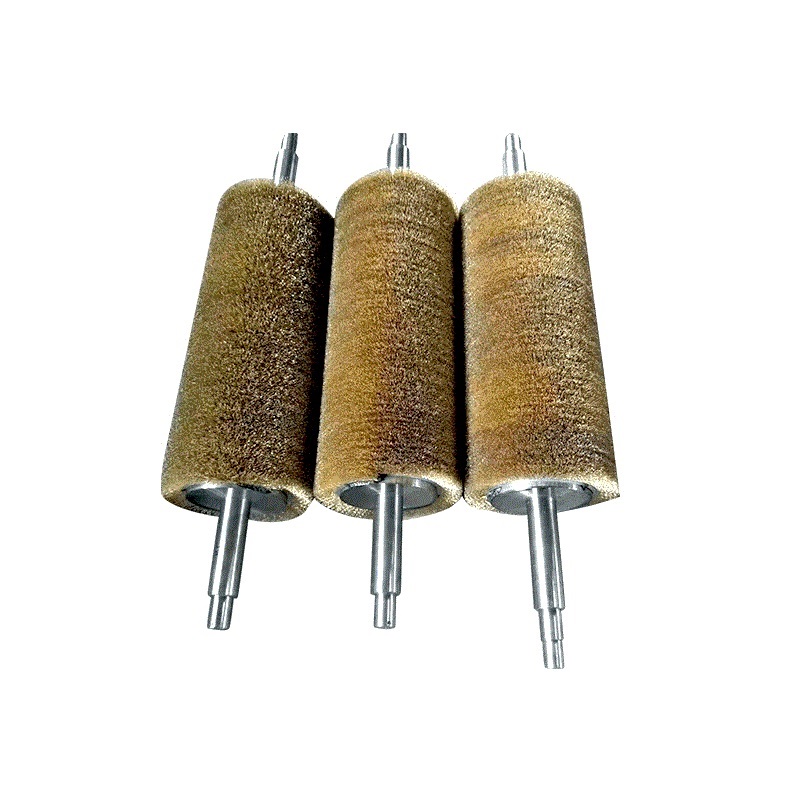
Steel, stainless steel, and brass wire filaments deliver aggressive mechanical action. Carbon steel wire is economical but can rust and can leave ferrous particles on stainless steel or aluminum parts. Stainless steel wire avoids rust contamination but costs more. Brass wire is softer and often used where sparking or scratching risk must be reduced, but it wears faster and may leave color transfer on light surfaces.
| Factor | Plain Nylon | Abrasive Nylon | Metal Wire |
|---|---|---|---|
| Cleaning action | Wiping and flexing | Wiping plus controlled abrasive | Scraping, impact, cutting |
| Surface risk | Low | Low to moderate | Higher on soft or coated parts |
| Water and chemical resistance | Strong | Strong | Varies; carbon steel can rust |
| Removes light oil and coolant | Yes | Yes | Yes |
| Removes rust and heavy scale | No | Light oxide only | Yes |
| Typical line use | Wash, rinse, dust removal | Deburring, oxide removal, finishing | Descaling, heavy cleaning |

Why Nylon Protects Surface Quality in Wet Wash Lines
In wet manufacturing environments, nylon absorbs very little water and maintains filament stiffness. A nylon brush therefore keeps predictable contact pressure across the part width. Metal wire brushes can lose tension if carbon steel corrodes, and broken wire tips can become embedded in parts or damage seals.
Abrasive nylon has another practical advantage: it produces a uniform matte finish without the directional scratches typical of steel wire. For manufacturers washing hydraulic valve bodies, pump housings, or aluminum extrusions, this reduces rework and helps keep surface roughness within specification [1].
How to Select the Right Nylon Cleaning Brush
Selection is not only about filament type. Brush diameter, filament length, density, trim length, and hub construction all affect cleaning performance.
1. Match Filament Diameter to the Contaminant
Use finer filaments for light dust and coolant film removal. Use coarser abrasive nylon filaments when the part carries fine burrs or light oxide. The filament should be stiff enough to remove the contaminant but soft enough to leave the required surface finish.
2. Match Brush Configuration to the Part Geometry
- Cylindrical brushes suit flat sheet, plate, and conveyorized parts.
- Disc brushes work well on irregular surfaces and edge radiusing in robotic cells.
- Strip brushes seal gaps and clean moving profiles, edges, and conveyor belts.
- Tube brushes clean internal bores and cross-holes.
For cylindrical nylon cleaning brushes, dense filament fill improves line coverage but may require more drive torque. <Main Features and Applications of HX Nylon Cylindrical Brush> covers filament arrangement and typical line applications.
3. Set the Right Interference
Interference is how much the filament tip extends into the part path. Too little interference causes weak cleaning. Too much increases heat, wear, and motor load. For plain nylon, start with 0.5–1.5 mm of tip contact. For abrasive nylon, use less interference because the abrasive grains do the work.
Operating Parameters That Decide Nylon Brush Life
Nylon brush life depends mainly on speed, load, chemical exposure, and temperature.
- Peripheral speed: Keep plain nylon and abrasive nylon below the filament manufacturer’s maximum speed. Excessive speed heats and permanently bends filaments [3].
- Chemical compatibility: Nylon 6/6 resists most machining coolants and mild alkaline wash solutions, but strong acids and some phenols can attack it [4].
- Temperature: Continuous exposure above 120–130°C can soften nylon 6/6. If the line includes hot drying or steam, position brushes before the high-temperature zone.
- Wet vs dry: Wet lines reduce frictional heat and help flush debris away from the brush face, which extends filament life.
When a nylon brush is specified correctly, it commonly outlasts carbon steel wire in wet washing because it does not rust or lose filament stiffness through oxidation. The main failure mode becomes filament fatigue, which can be managed by using a larger hub and proper trim length [1][3].
Abrasive nylon disc brushes provide a good balance between cleaning and surface control in automated cells. <Abrasive Disc Brush: An Efficient Tool for Many Applications> covers configuration choices and typical inline operations.
Get a Mid-Project Brush Recommendation
If you are specifying brushes for a manufacturing wash line, send the following details to [email protected]:
- Part material and required surface finish
- Contaminant type and adhesion level
- Line speed and brush mounting method
- Wet or dry process, cleaning fluid pH, and temperature
This information lets a technical engineer recommend the right filament, density, and hub design without trial-and-error sampling. For urgent inquiries, call +86 1580 0932 713.
When Metal Wire Still Makes Sense
Metal wire brushes remain the better choice in three situations:
- Heavy rust, mill scale, or weld slag must be removed in one pass.
- The surface tolerates visible scratch patterns and will be painted or coated afterward.
- The process is dry or the environment would cause nylon to soften.
In those cases, specify stainless steel wire for wet lines to avoid rust contamination, and use crimped wire when the goal is a smoother finish than knotted wire can deliver. <Wire Wheel Brush: The Right Assistant for Industrial Cleaning and Polishing> covers the difference between cleaning, polishing, and heavy stock removal.

Avoiding Common Surface Washing Mistakes
Mistake 1: Treating all nylon as the same. Cast nylon, extruded nylon 6/6, and abrasive nylon behave differently under load, heat, and chemical exposure.
Mistake 2: Replacing metal wire with the same brush dimensions. Nylon cleans through repeated flexing contact, so it often requires a larger diameter or higher density to match the same visual cleaning result. Keep the same brush size only when the target is light debris removal.
Mistake 3: Skipping filament wear checks. Worn nylon filaments shorten and lose contact. Set a replacement point based on filament length loss, not only visual appearance.
Mistake 4: Ignoring drive load changes. A sudden drop in motor current can mean the brush is no longer contacting the part. A sudden rise can mean over-interference, which will damage both the brush and the part surface.
Get a Wash-Line Brush Recommendation
Tell us your production condition and we will recommend a nylon or wire brush configuration for your specific surface washing task.
- Part material, size, and surface finish target
- Contaminant type and required removal rate
- Line speed, brush mounting position, and available motor power
- Cleaning fluid, pH, temperature, and wet or dry process
Email [email protected] or call +86 1580 0932 713. Huixi Brush provides customized industrial brush solutions with ODM/OEM support, free samples, and fast delivery.
FAQ
Is nylon or metal wire better for cleaning aluminum parts?
Nylon is usually better for aluminum parts. Plain nylon removes light coolant and dust without scratching the surface, while abrasive nylon can remove light oxide and fine burrs without embedding ferrous particles. Steel wire can gall aluminum and leave rust contamination.
Can abrasive nylon replace steel wire for deburring?
In most light and medium deburring applications, yes. Abrasive nylon removes fine burrs and produces a more uniform surface finish than steel wire. It is not the right choice for heavy mill scale, thick weld slag, or deeply embedded rust.
What is the difference between plain nylon and abrasive nylon?
Plain nylon cleans by wiping and flexing. Abrasive nylon contains bonded abrasive grains throughout each filament, so it removes material gradually and keeps exposing fresh cutting edges as it wears.
How do I know if my brush is wearing too fast?
Measure filament length at fixed intervals. If the brush loses more than 20–25% of its original trim length in a short period, inspect speed, interference, chemical exposure, and process temperature. Also check whether the hub is slipping or part alignment has changed.
Can nylon brushes be used in hot cleaning lines?
Nylon 6/6 can handle continuous temperatures around 120–130°C, but performance drops as it approaches the upper limit. If the line includes steam or high-temperature drying, mount brushes before the heat zone or select a heat-stabilized nylon grade.
References
[1] ISO 8501-1:2007, Preparation of steel substrates before application of paints and related products — Visual assessment of surface cleanliness, International Organization for Standardization.
[2] ASTM D638-14, Standard Test Method for Tensile Properties of Plastics, ASTM International.
[3] Machinery’s Handbook, 31st ed., Industrial Press, 2020.
[4] “Abrasive Nylon Filaments for Surface Finishing,” Plastics Technology, Gardner Business Media.
If you’re interested, check out these related articles:
main features and applications of hx nylon cylindrical brush
the differences between knotted wire wheel brush and crimped wire wheel brush
abrasive disc brush an excellent industrial surface treatment tool
how do you know about deburring brushes


 Whatsapp
 Email
Email